
Buying from abroad
Questions we get most often.
Yes, in your own name, without residency or a local company. In towns and on the coast you hold the same rights as a Salvadoran. Land the registry describes as rural carries one extra test in the Constitution: your home country must let Salvadorans buy there too. Your notary checks it for your nationality before anything is signed. The beach itself, the strip just above high tide, belongs to the state everywhere in the country, and every plot we sell sits well back from it.
No. You sign a special power of attorney before a notary where you live and have it apostilled. The US, Canada, the UK and every EU country use the apostille. If the power is in English it is translated into Spanish here. Your attorney then signs the deed in your name. Salvadoran consulates can also prepare the power.
A Salvadoran tax number, the NIT. If you hold a Salvadoran DUI, that already is your NIT. If not, the Ministry of Finance issues one against your passport, in person in about half an hour or through your attorney. Your notary will tell you the quickest route for you.
Under 5% of the price, all in. Transfer tax is 3% on the part of the price above US$28,571.43, the registry fee is US$0.63 per US$100, and the notary's fee is agreed in writing beforehand. On a US$400,000 plot that is US$11,142.86 in transfer tax and US$2,520.00 in registry fees, plus the notary. By custom the buyer pays these and the seller pays the seller's own taxes. After that, there is no annual property tax on land in El Salvador; the city hall charges small service fees.
Your own notary orders a certification from the National Registration Center showing the registered owner and anything registered against the land. The registry numbers are on each plot's page, or on request, so your notary can check them first. It is our family's land and we sell it directly: the owners sign the deed before a notary, and you meet them, or their attorney, at the signing. We do not publish deed images online.
Plan on four to eight weeks from agreed terms to the land registered in your name: your notary's checks and the promise of sale, the deed, then registration. Buying under a power of attorney adds the time to apostille and courier it.
Most buyers pay cash. Salvadoran banks lend mainly against local income and credit history, so buyers from abroad usually borrow at home, against property or investments they already hold. If you are Salvadoran and live abroad, ask your bank about its diaspora programmes.
Permits come from the city hall or the planning office, depending on size, with an environmental review by the Ministry of Environment for larger projects. Its published response times run from five working days for small works to twenty to sixty for bigger ones. We have taken our own projects through this system and will introduce you to the architects who drew them.
Yes. We work with the architects who drew our own projects, and we live within half an hour. Tell us what you want and we will come back with a design, a build cost and a timetable.
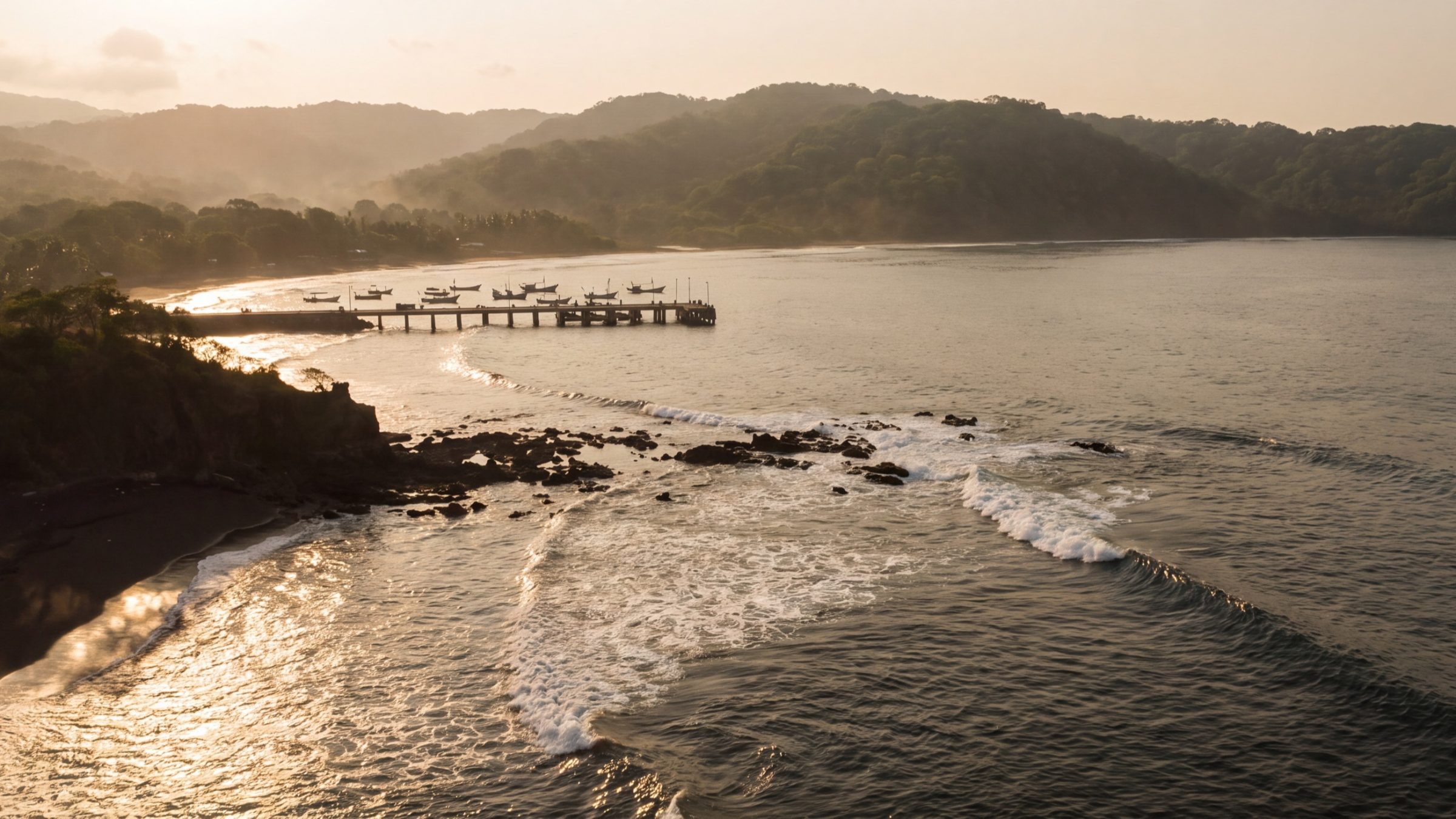
Come and see it. We spend three days on the coast with you, drive you to every plot, the port at La Libertad and Palmarcito, and you meet the family. Book a visit and we will sort the rest. Or we walk it with you on a live video call, at a time you choose.
The full guide
Buying land in El Salvador.
Who can buy, the seven steps, what it costs on top of the price, and how to check the title, written out in full. Free, no form to fill in.
Visit
Come and see the land.
Three days on the coast with us. We'll drive you to every plot, the port, and Palmarcito.